
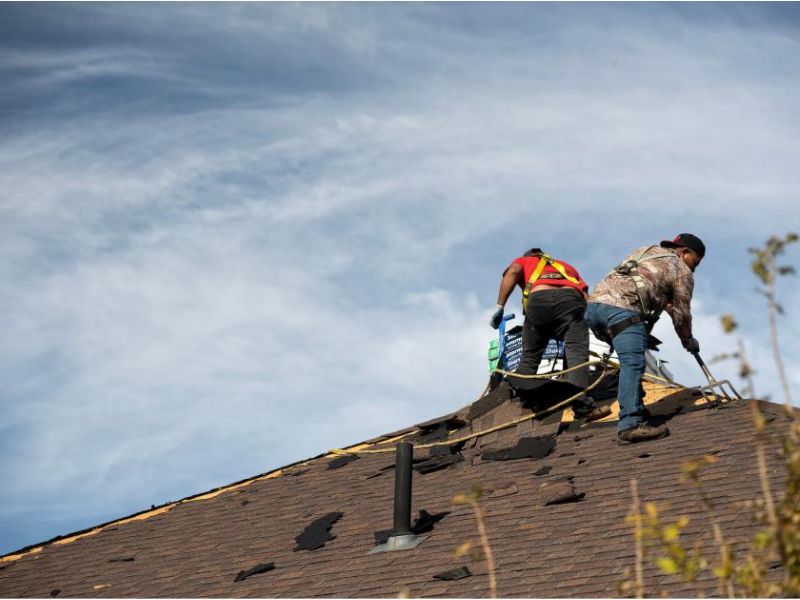
Miami-Dade County sits inside Florida’s High-Velocity Hurricane Zone (HVHZ), where design wind speeds reach up to 185 mph, the strictest roofing standard in the country. For Coral Gables homeowners, the roof isn’t just a design choice. It’s the first line of defense against hurricane-force winds, and the materials, fasteners, and underlayment you choose directly affect your safety, your insurance premium, and how your home performs when a storm hits.
This guide covers what actually makes a roof hurricane-resistant in Coral Gables, which materials hold up best, and how local code requirements like the Miami-Dade Notice of Acceptance (NOA) and HVHZ standards factor into your decision.
Key Takeaways
- Miami-Dade’s HVHZ requires roofing products to carry a Notice of Acceptance (NOA), a stricter approval than standard Florida Building Code product approval.
- Tile and metal roofing generally outperform standard asphalt shingles in wind uplift resistance, though each carries different cost and structural tradeoffs.
- A wind mitigation inspection ($75 to $175) can qualify Coral Gables homeowners for meaningful insurance discounts.
- Roof-to-wall connections, not just the roofing material, are one of the most overlooked factors in hurricane performance.
What Makes a Roof “Hurricane-Resistant” in Coral Gables?
A hurricane-resistant roof in Coral Gables has to meet Miami-Dade County’s HVHZ standard, the most stringent building code zone in the United States, covering Miami-Dade and Broward counties. Under this standard, every roofing product installed, from underlayment to tiles to fasteners, must carry a Miami-Dade Notice of Acceptance (NOA) rather than the standard statewide Florida Building Code product approval.
The NOA testing protocol includes large missile impact testing (a 9-pound piece of lumber fired at the roof surface at speed) and cyclic pressure testing that simulates sustained hurricane wind loads. We cover exactly how this approval system works in our guide to Miami-Dade NOA requirements, and how HVHZ construction rules apply beyond roofing in our overview of HVHZ construction standards.
In practice, “hurricane-resistant” means three things working together: an NOA-approved material, a fastening system rated for your property’s wind exposure, and correct installation by a licensed contractor familiar with HVHZ inspection requirements.
Which Roofing Materials Perform Best in Coral Gables’ Wind Zone?
Concrete and clay tile, standing seam metal, and Class 4 impact-rated shingles all carry NOA approval for HVHZ use, but they perform differently under wind load and come with different cost and structural considerations.
| Material | Wind Performance | Typical Lifespan | Notes for Coral Gables Homes |
|---|---|---|---|
| Concrete or clay tile | Excellent uplift resistance from mass, when properly fastened | 40 to 50 years | Common on Coral Gables’ Mediterranean Revival homes; the roof structure must be engineered to carry the added weight |
| Standing seam metal | Very high wind resistance; interlocking panels resist uplift | 40 to 60 years | Lightweight, reduces structural load, holds up well in salt air with the right coating |
| Class 4 impact shingles | Good wind resistance when correctly fastened; more affordable | 20 to 30 years | A practical option where the architectural style allows it |
Weight isn’t automatically an advantage. Tile resists uplift because of its mass, but that only helps if the structure underneath was built, or reinforced, to carry it. That’s worth confirming before choosing tile on an older re-roof.
How Do Roof-to-Wall Connections Affect Hurricane Performance and Insurance?
The connection between your roof and exterior walls, not just the roofing material itself, is one of the biggest factors in whether a roof survives a hurricane. Homes with only toe-nailed connections resist roughly 50 to 100 pounds of uplift per connection, while double-wrap hurricane straps resist 800 pounds or more.
A wind mitigation inspection, a standardized assessment used to qualify for Florida’s hurricane insurance discounts, evaluates seven features of your home: roof covering type, roof deck attachment, roof-to-wall connection, roof shape, secondary water resistance, opening protection, and the code year your home was built to. The inspection costs $75 to $175, stays valid for five years, and the resulting discount frequently exceeds $500 to $2,000 per year, which makes it one of the higher-value inspections a Coral Gables homeowner can schedule.
If your attic inspection shows toe-nailed connections only, upgrading to hurricane straps typically costs $1,500 to $3,500 and doesn’t require a full re-roof.
What Is a Sealed Roof Deck, and Does Your Coral Gables Home Have One?
A sealed roof deck uses a self-adhering underlayment across the entire roof surface, not just the edges, so that if tiles or shingles tear off in a storm, the deck underneath still keeps water out. Standard 30-pound felt paper, still common on older re-roofs, offers little protection once exposed to hurricane-force wind, since the same wind that removes the roof covering also shreds unsealed felt.
Miami-Dade’s HVHZ code requires enhanced underlayment on new installations, but homes re-roofed under older permits, or repaired piecemeal over the years, may not have a fully sealed deck. Adding one during a re-roof typically adds $1,000 to $3,000 to the project cost, a modest premium against the water damage a partial roof failure can cause.
How Do You Know If Your Roof Meets Coral Gables’ Current Hurricane Standards?
A licensed inspection is the only reliable way to confirm compliance, but a few signs suggest it’s worth scheduling one sooner rather than later: cracked or slipping tiles, brittle or exposed underlayment at the edges, corrosion around metal flashing, or a roof installed before the county’s post-1992 code updates that followed Hurricane Andrew.
Permitting matters here too. Any roof replacement or significant repair in Coral Gables requires a permit through Miami-Dade’s building department, a process we walk through in our guide to Miami-Dade building permits. Work completed without a permit won’t carry a valid NOA record tied to your property, which can complicate both insurance claims and future home sales.
Frequently Asked Questions
Does every roof in Coral Gables need a Miami-Dade NOA?
Yes. Coral Gables falls within Miami-Dade County’s HVHZ, so every roofing product installed, including underlayment, fasteners, and the roof covering itself, must carry a valid Notice of Acceptance rather than standard statewide product approval.
Is metal or tile roofing better for hurricane resistance?
Both perform well when properly installed and NOA-approved. Metal panel systems are lighter and often rated for higher wind speeds, while tile relies on mass for uplift resistance but requires a structure engineered to carry the added weight.
How much does a wind mitigation inspection save on insurance?
Savings vary by insurer and property, but a wind mitigation inspection ($75 to $175) frequently qualifies homeowners for discounts of $500 to $2,000 or more per year, since it documents features like roof-to-wall connections and secondary water barriers.
Can I get hurricane-resistant roofing without a full re-roof?
In some cases, yes. Retrofitting hurricane straps to existing roof-to-wall connections and resealing penetrations can improve performance without replacing the entire roof, though a full re-roof is the only way to add a sealed deck across the whole surface.
How do I know if my current roof still meets code?
A licensed roofing contractor can inspect your roof covering, deck attachment, and flashing, and confirm whether prior work was permitted and NOA-compliant. This matters most before hurricane season, or before listing a home for sale.
Protecting Your Coral Gables Home Starts With the Right Roof
A hurricane-resistant roof is a system, not a single material choice: NOA-approved products, a properly rated fastening system, and a sealed deck, installed by a contractor who understands Miami-Dade’s HVHZ requirements. On Point Construction has handled roofing projects across Coral Gables and Miami-Dade for over a decade, working as a licensed and insured general contractor on every job. Explore our roofing services or contact our team for an inspection.