

Miami-Dade’s plan review process runs six to eight weeks on average, the slowest turnaround of any major South Florida county. For a Coral Gables homeowner planning a kitchen remodel or a new roof, that timeline can decide whether a project starts this quarter or next.
Building permits exist to confirm your project meets Florida’s building code and the High-Velocity Hurricane Zone (HVHZ) standard, not to slow you down for its own sake. The friction comes from paperwork gaps, missed thresholds, and confusion about who files what. This guide walks through why Miami-Dade requires permits, how long the process really takes, when a Notice of Commencement applies, and the step-by-step path from application to closeout.
| Key Takeaways Timeline: Miami-Dade plan review averages 6-8 weeks, the longest of any major South Florida county. NOC threshold: Any project over $2,500 (or $7,500 for roof and A/C replacement) requires a recorded Notice of Commencement under Florida Statute 713.13. Corrections cost time: Each correction cycle from the county adds roughly one to two weeks and often a resubmission fee. Who files what: A licensed general contractor manages permitting, NOC filing, and inspections as one coordinated process. |
Why Does Miami-Dade Require a Building Permit for Home Projects?
A Miami-Dade building permit confirms that a licensed contractor’s plans meet the Florida Building Code’s 8th Edition and the county’s HVHZ wind-load requirements before any work begins. This matters more in Miami-Dade than almost anywhere else in the country, since the county sits inside the state’s toughest hurricane-resistance zone.
Permits are not optional paperwork. They trigger mandatory inspections at defined stages of construction, from framing to final electrical, so a structure is verified as it is built rather than after the fact. Skipping a permit on a project that requires one can result in stop-work orders, fines, and complications when the property is later sold, since unpermitted work typically has to be disclosed.
Roofing, additions, structural changes, and most electrical, plumbing, and HVAC work all require permits. If you are planning a broader project, our general contractor Miami services page outlines which trades typically fall under one permit versus separate trade permits.
How Long Does the Miami-Dade Permit Process Actually Take?
Simple residential permits, such as a water heater swap or a single trade permit, can clear in five to ten business days. Projects requiring multi-department review, like additions or structural work, typically take six to twelve weeks from submission to issuance, and complex commercial-scale projects can run three to six months.
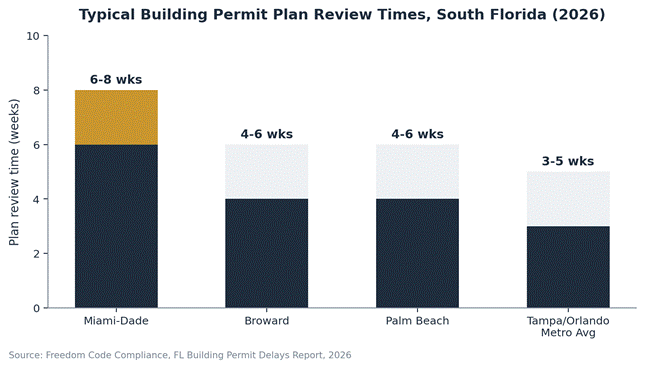
Miami-Dade’s plan review process runs longer than Broward, Palm Beach, and the Tampa/Orlando metro area.
The county’s Regulatory and Economic Resources department (RER) handles unincorporated areas, while each of the 34 incorporated municipalities, Coral Gables included, runs its own permitting office with its own queue. That is why two nearly identical projects a few miles apart can move at very different speeds.
Correction cycles are the biggest hidden cost. Each round of corrections restarts the review clock for the departments involved and commonly adds a resubmission fee. Roofing projects carry their own approval layer through NOA (Notice of Acceptance) product documentation.
What Is a Notice of Commencement, and When Do You Need One in Coral Gables?
A Notice of Commencement (NOC) is a document recorded with the county before construction starts on any project with a direct contract price over $2,500, or $7,500 for roof and air conditioning system replacement. Recording the NOC is what protects a homeowner from paying twice if a subcontractor later files a lien.
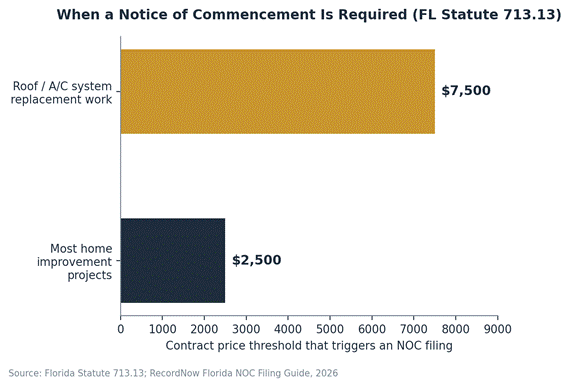
Florida Statute 713.13 sets separate NOC thresholds for general improvements and roof or A/C replacement work.
Under Florida Statute 713.13, only the property owner may sign the NOC, though a contractor typically prepares and files it on the owner’s behalf. It must be recorded in the Miami-Dade County public records and a certified copy posted at the job site before the first inspection. Skipping this step does not stop a permit from being issued, but it removes the owner’s legal protection against duplicate payment claims.
For remodeling projects that combine several trades, such as a kitchen or full home remodel, the NOC usually needs to reflect the full scope of work rather than each trade separately.
Step-by-Step: The Miami-Dade Building Permit Process for Homeowners
The process follows a consistent sequence regardless of project size, though the review depth changes with scope.
- Verify zoning and jurisdiction. Confirm your property’s zoning classification and folio number through the Miami-Dade GIS portal, since folios starting with “30” fall under the county’s own e-permitting system.
- Prepare signed and sealed plans. A licensed design professional or contractor prepares digitally signed and sealed plans that meet the current Florida Building Code and HVHZ wind requirements.
- Submit through the county or municipal portal. Most applications now go through Miami-Dade’s Submission Portal, since the county’s Permitting and Inspection Center operates primarily as a virtual service.
- File the Notice of Commencement. Record the NOC if your project exceeds the applicable dollar threshold, then post a certified copy at the job site.
- Respond to plan review comments. Initial plan review generally takes one to ten business days for straightforward projects; address every correction comment in full to avoid restarting the clock.
- Schedule inspections as work progresses. Work only begins once the permit is issued and posted. Inspections are then scheduled at each required construction stage, from framing to final.
- Close out the permit. A final inspection and closeout package, including NOA documentation and warranty information where applicable, closes out the permit and clears the property record.
Common Permit Mistakes That Delay Coral Gables Projects
Most delays trace back to a handful of avoidable issues rather than county backlog alone.
- Unresolved code violations or an expired contractor license: Resolving these first prevents an automatic rejection at submission.
- Starting work before the permit is posted: Homeowners sometimes assume a permit is not required, then face a stop-work order mid-project.
- Incomplete digital plan packages: Plans over 250 MB or scanned above 300 dpi are rejected by the portal before review even starts.
- Skipping the Notice of Commencement: An unrecorded NOC on a qualifying project removes the owner’s payment protection even though it does not block the permit itself.
Let a Licensed Contractor Handle the Paperwork
On Point Construction manages permitting, NOC filing, and inspection scheduling as part of every project in Coral Gables and across Miami-Dade, so homeowners are not tracking portal statuses on their own. Request a free estimate to schedule a site visit and permit consultation.
Frequently Asked Questions
Do I need a permit for a bathroom remodel in Coral Gables?
Yes, in most cases. Any remodel involving plumbing relocation, electrical changes, or structural work requires a permit under the Florida Building Code, and projects over $2,500 also require a recorded Notice of Commencement.
How much does a Miami-Dade building permit cost?
Fees vary by project scope and municipality, typically calculated as a percentage of construction value plus flat review fees; each correction cycle can add roughly $150 per round based on regional contractor data.
Can I file a Notice of Commencement myself?
Yes. Florida Statute 713.13 requires the property owner to sign the NOC personally, though most homeowners have their general contractor prepare and record it as part of the permitting package.
What happens if I skip a required permit in Miami-Dade?
Unpermitted work can lead to stop-work orders, fines, and mandatory disclosure when the home is sold, and it can also complicate insurance claims tied to HVHZ compliance.
Conclusion
Miami-Dade’s permit process is slower than most of the state, but it exists to keep homes safe under hurricane-zone conditions. Understanding the NOC threshold, the review timeline, and the common rejection triggers puts a Coral Gables homeowner ahead of most permit applicants before the first submission even goes in.